

Introduction
In today’s digital era, technologies such as Artificial Intelligence (AI), Internet of Things (IoT), and smart devices are generating massive amounts of data every second. Managing, processing, and analyzing this data efficiently has become a critical challenge for organizations and governments alike. To address this challenge, two computing paradigms—Cloud Computing and Edge Computing—have emerged as key solutions.
While cloud computing has been the backbone of digital transformation for over a decade, edge computing is gaining attention due to its ability to deliver faster and more reliable data processing. Understanding the difference between these two models is essential for designing modern, secure, and high-performance digital systems.
This blog explores the concepts of cloud and edge computing, highlights their differences, and explains where each technology is best applied.
What Is Cloud Computing?
Cloud computing is a model where data storage, processing, and computing power are delivered through remote centralized servers over the internet. Instead of owning and maintaining physical infrastructure, organizations rent resources from cloud service providers.
Popular cloud platforms include Amazon Web Services (AWS), Microsoft Azure, and Google Cloud Platform (GCP).
Key Characteristics of Cloud Computing:
- Centralized data centers
- High scalability and flexibility
- Pay-as-you-go cost model
- Easy access from anywhere
Advantages of Cloud Computing:
- Reduced hardware and maintenance costs
- Reliable data backup and disaster recovery
- Powerful computing for analytics and AI
- Global accessibility
Common Use Cases:
- Website and application hosting
- Email and collaboration platforms
- Enterprise software systems
- Big data storage and analysis
What Is Edge Computing?
Edge computing is a decentralized computing model that processes data near the source of data generation, such as sensors, cameras, mobile devices, or local servers. Instead of sending all data to the cloud, critical processing happens at the “edge” of the network.
This approach is especially useful when real-time responses are required.
Key Characteristics of Edge Computing:
- Local data processing
- Minimal latency
- Reduced reliance on internet connectivity
- Better control over sensitive data
Advantages of Edge Computing:
- Faster decision-making
- Lower bandwidth usage
- Improved system reliability
- Enhanced privacy and security
Common Use Cases:
- Smart surveillance systems
- Autonomous vehicles
- Industrial control systems
- Remote healthcare monitoring
Edge Computing vs. Cloud Computing: A Comparison
| Feature | Cloud Computing | Edge Computing |
|---|---|---|
| Processing Location | Centralized data centers | Near data source |
| Latency | Higher | Very low |
| Internet Dependency | High | Low |
| Scalability | Extremely scalable | Limited |
| Data Security | Centralized protection | Localized control |
| Cost Structure | Subscription-based | Infrastructure-dependent |
When to Use Cloud Computing?
Cloud computing is ideal when:
- Large-scale data storage is required
- Applications do not need real-time responses
- Global accessibility is important
- Cost efficiency and scalability are priorities
Examples include enterprise systems, online services, and data analytics platforms.
When to Use Edge Computing?
Edge computing is preferred when:
- Real-time data processing is critical
- Network connectivity is unreliable
- Data privacy is a major concern
- Low latency is essential
Examples include military systems, smart defense infrastructure, autonomous drones, and industrial automation.
Hybrid Approach: Best of Both Worlds
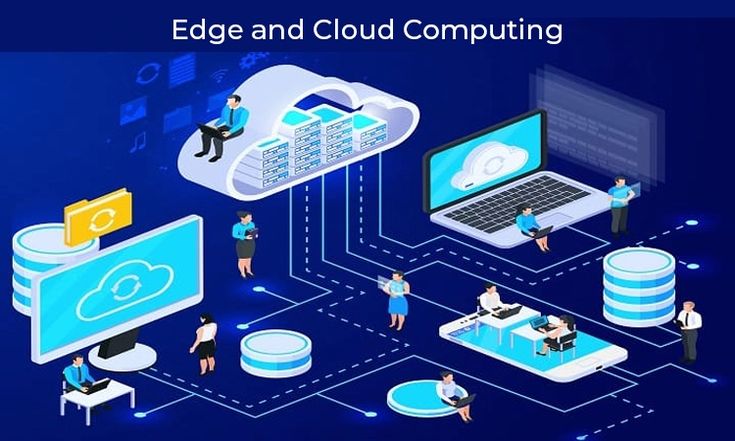
Modern systems increasingly use a hybrid model, where edge devices handle real-time processing while the cloud manages long-term storage, analytics, and system coordination. This approach delivers speed, efficiency, and scalability together.
Conclusion
Cloud computing and edge computing are both essential components of modern digital infrastructure. While cloud computing offers scalability and centralized power, edge computing provides speed, reliability, and localized intelligence. Rather than replacing one another, these technologies work best together to support advanced applications in defense, industry, healthcare, and smart governance.
As technology continues to evolve, understanding and implementing the right balance between cloud and edge computing will be critical for future-ready systems.